In the field of bioanalytical testing, temperature plays a critical role in determining experimental accuracy, biological sample activity, and reagent stability. Whether in nucleic acid amplification, biochemical immunoassays, pathological analysis, or biological sample storage, high-precision and highly stable temperature control technologies are essential.
Traditional compressor-based cooling systems and heating-wire temperature control solutions are increasingly unable to meet the demands of modern high-end bioanalytical instruments due to their large size, slow thermal response, noticeable vibration, and relatively high energy consumption.
In recent years, thermoelectric cooling (TEC) technology has gradually replaced conventional temperature control solutions thanks to its solid-state bidirectional temperature regulation, rapid response speed, high control accuracy, and vibration-free operation. TEC modules are now widely used in various bioanalytical instruments and have become a core technology for precision temperature control in the biomedical field, providing a strong technical foundation for high-quality industry development.
1. Understanding Thermoelectric Cooling Technology
The core component of thermoelectric cooling technology is the TEC module, which operates based on the Peltier effect to achieve heat transfer and energy conversion.
A TEC module is typically composed of bismuth telluride semiconductor elements, copper conductors, and ceramic substrates. When electrical current passes through the semiconductor materials, one side of the module absorbs heat and becomes the cold side, while the opposite side releases heat and becomes the hot side.
By reversing the direction of the current, the module can quickly switch between cooling and heating modes. Combined with intelligent PID temperature control algorithms, TEC systems can precisely regulate current levels and achieve highly accurate temperature management, with control precision reaching up to ±0.1°C.
2. Five Key Advantages of Thermoelectric Cooling for Bioanalytical Instruments
Bioanalytical instruments require extremely demanding temperature control systems that ensure both temperature uniformity and compatibility with compact, long-term continuous operation. TEC technology perfectly addresses these industry challenges.
1) Bidirectional Temperature Control with Fast Response
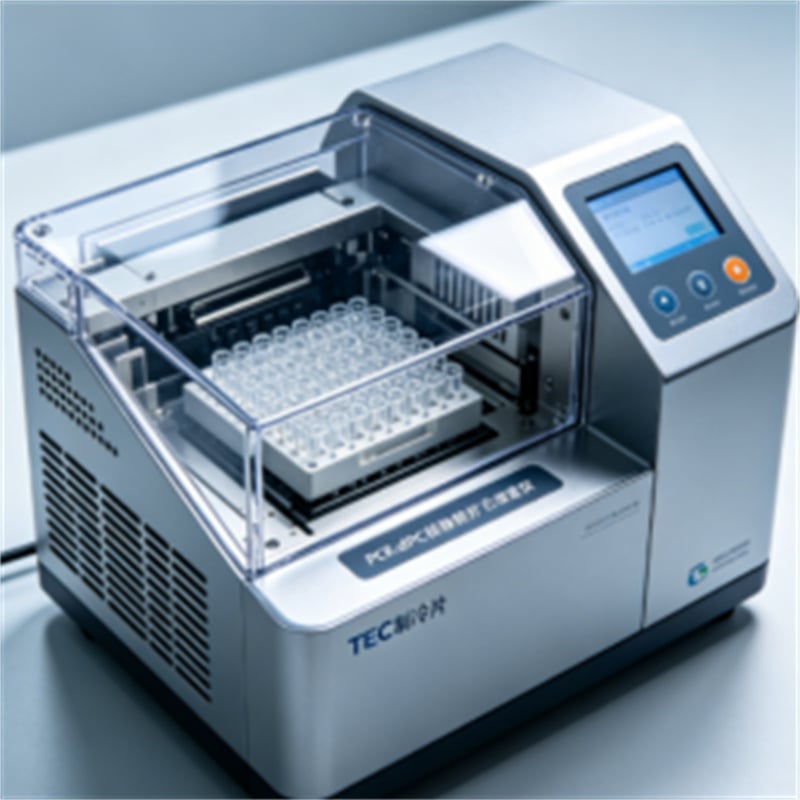
TEC modules can switch instantly between heating and cooling modes, delivering millisecond-level thermal response. In PCR thermal cyclers, for example, rapid cycling between denaturation at 95°C and annealing at 65°C significantly shortens testing time and improves detection efficiency.
2) High Precision Temperature Control
TEC systems can achieve temperature control accuracy of up to ±0.1°C. Excellent chamber temperature uniformity helps prevent sample degradation and measurement errors caused by temperature fluctuations, meeting the stringent requirements of high-precision biological experiments.
3) Silent and Vibration-Free Operation
With a fully solid-state structure and no mechanical moving parts, TEC modules operate quietly and without vibration, making them ideal for sensitive laboratory and medical environments.
4) Compact Design for Instrument Miniaturization
TEC modules are compact and support series or parallel configurations, allowing easy integration into precision instruments without complex piping systems. This makes them highly suitable for the ongoing trend toward miniaturized, integrated, and portable bioanalytical equipment.
5) High Reliability and Low Maintenance Cost
Using ceramic insulation packaging technology, TEC modules offer excellent resistance to thermal shock and high-temperature aging. They can withstand hundreds of thousands of heating and cooling cycles with low failure rates during long-term continuous operation, significantly reducing maintenance and replacement costs for medical equipment.
3. Wide Application Across Bioanalytical Equipment
Today, thermoelectric cooling technology has been widely adopted throughout the bioanalytical industry chain, from clinical diagnostics to scientific research applications.
Many mainstream bioanalytical instruments are now equipped with TEC temperature control modules to ensure stable and accurate thermal management.
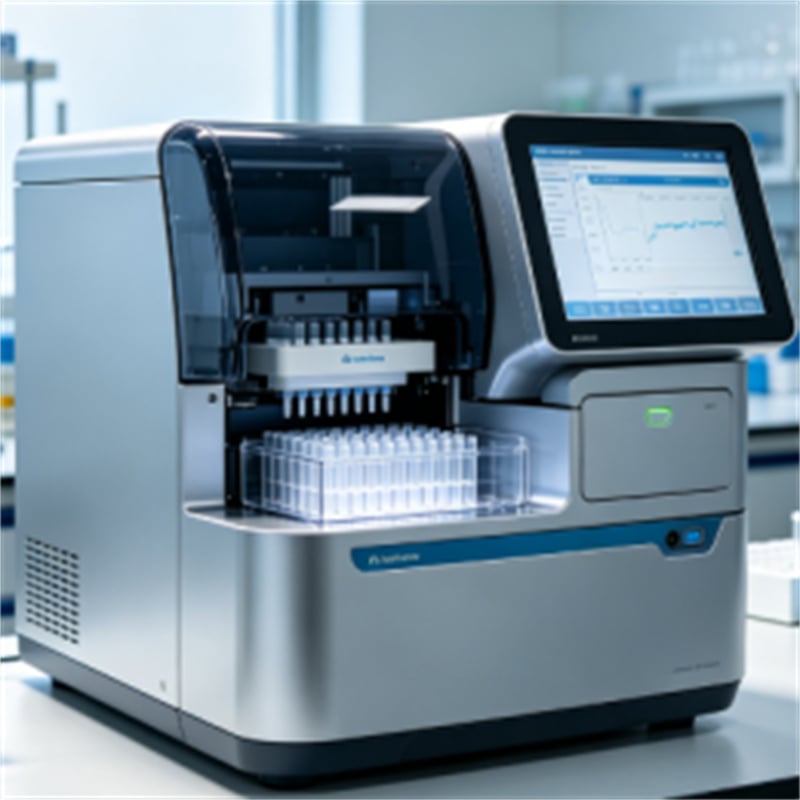
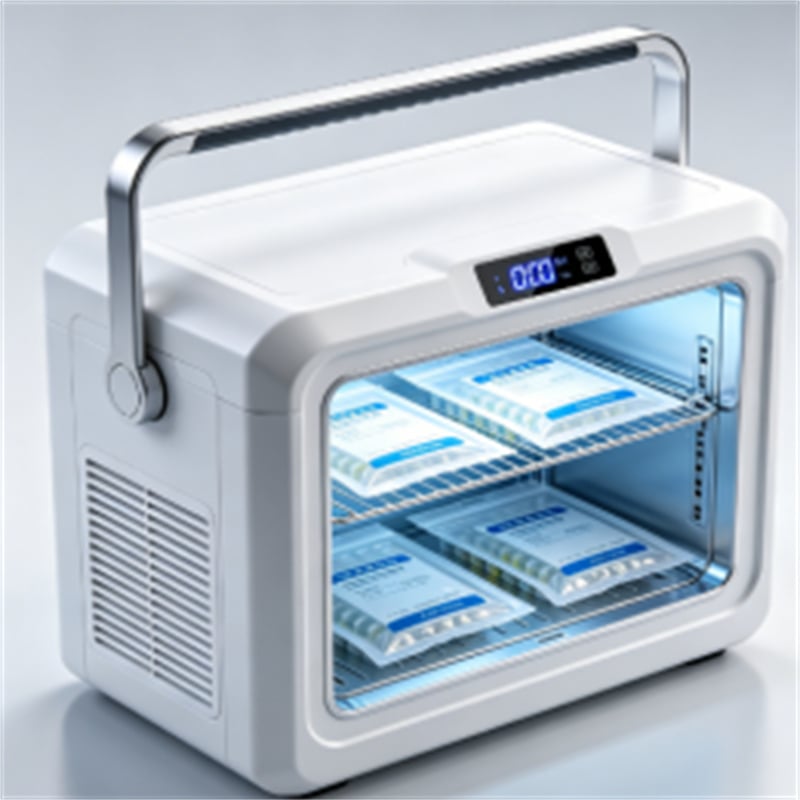
Typical applications include:PCR Thermal Cyclers,Biochemical Analyzers,Portable Biomedical Refrigerators etc.
4. Industry Outlook: Strong Growth Potential Ahead
Driven by the rapid development of precision medicine, biotechnology research, and primary healthcare services, the global bioanalytical instrument market continues to expand steadily. This growth is also fueling rising demand for high-precision temperature control components.
From an industry perspective, thermoelectric cooling technology shows strong long-term market potential. As biomedical equipment continues evolving toward higher precision, portability, and intelligence, TEC technology is expected to play an increasingly important role in future healthcare and life science applications.
Conclusion
From basic temperature regulation to advanced precision biological testing, thermoelectric cooling technology has become an indispensable component in modern bioanalytical instruments. With its advantages of precision, stability, safety, and efficiency, TEC technology enables highly reliable thermal management within compact devices.
As the biomedical industry continues to grow rapidly, thermoelectric cooling technology will continue to evolve and innovate, empowering the high-quality development of biomedical equipment and supporting the advancement of precision medicine and life science research worldwide.


 EN
EN